
ABOUT US &
OUR FOCUS
We Transfer to Digital and That's All We Do.
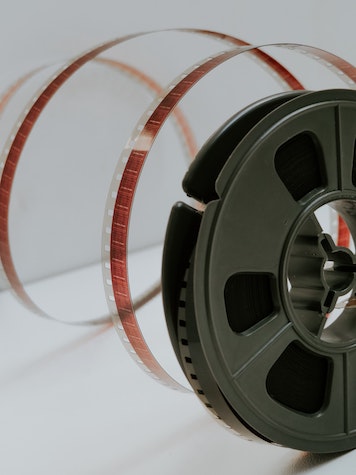
We transfer the following formats to digital formats HD and SD Superior quality at reasonable rates:
- Small Gauge Film 8mm - super 8mm mos - super 8mm sound
- 16mm mos - 16mm sound - super 16mm
We're a small team of professionals dedicated to preserving these film formats and moving them into the digital age We also convert analog and digital videotape to dvds and digital files. As enthusiasts, we do our best to support small gauge film in a number of ways, from festival and workshop sponsorships, scholarships and awards to pro bono community work.
Each of us pursues an artistic avocation in our spare time including music, writing and filmmaking. So we understand the creative needs of our clients and do our utmost to provide you with the best product at an affordable price.
Back in 1987 when we first opened our doors VHS was leading-edge technology. How far we've come! All of our transfers are now to digital media. Who knows what lies ahead for film?
We've not only seen a huge increase in the amount of archival film being brought in for transfer, but Kodak has also made a 10 year commitment to film, so those of you still shooting super 8mm and 16mm can continue with confidence.
Who We've Worked With









Commercial Productions
Exclusive Film & Video Services re-branded as Exclusive Film & Digital Media to reflect our sole focus on digital transfers.
With 27 years of experience transferring small gauge film formats for broadcast we understand the importance of delivering an outstanding product in a timely manner. We also understand the importance of keeping in close communication with our clients about their needs and wishes.
We're proud to list among our long time clients the NFB, CBC, CTV, CITY TV, Academy Award and Canadian Screen Award winning and nominated directors, as well as production houses, archives and universities across Canada.
Software trickery simply cannot successfully simulate the look of film.
As for archival footage used in productions, it's alarming how many of these transfers are terrible. In such cases it's obvious that the transfer house has no interest in producing quality images. Film deserves better than their slipshod methods.
With transfer prices starting as low as $50.00 and fast turnaround times you can afford to get the “film look” the real way.
Home Movie Transfers
Home movies are a grassroots way of recording not only a family's history, but a history of society as well.
Now is the time to transfer your films to digital media. It's not that the film will deteriorate (it will probably outlast any medium it's being transferred to), but the projectors used to view the films are disappearing. And as Baby Boomers age and also start to disappear, it's important to view these films with them and write down the particulars of who's who and what's what so that this information isn't lost forever.
We're not the cheapest home movie transfer facility in Canada, but as far as value for money, we feel we're the best. Your films do not leave our premises. Each reel is inspected, assembled and hand cleaned. Any repair work is done at that time. Our technician, with more than twenty years experience in film transfers, is with your job for the duration, making corrections as needed.
While we protect the identities of all of our customers, we can say that we've transferred the home movies of Canadian and British prime ministers, American presidents, Nobel Prize recipients, Academy Award and Canadian Screen Award winners and nominees, Governor General Award winners, and members of the Order of Canada as well as thousands of families.
We offer a free 3 minute sample transfer of your footage so that you can compare it to other transfers. If cheaper transfer houses feel that they're as good as we are they should be eager to also provide a free 3 minute sample!

Sample of Our Work
Please check out our Youtube for more samples!
Hints and Tips For A Better Super 8 Experience
1. Before you shoot anything check the batteries in your camera and lightmeter.
2. Clean your lens and gate BEFORE EACH SHOOT.
3. If shooting reversal stock check to see if your 85b filter is in or out. You can check visually by looking through the gate while you run the camera. If you see white light it's out. If you see an orange tint it's in.
4. If your footage/meter counter doesn't work, you'll know your cartridge is done when you see "exposed" on the film. If you can't tell whether or not the film is moving, put a mark on the film AND RUN THE CAMERA. If it disappears your film is being pulled through.
5. If your eyepiece (diopter) is adjustable set it to your individual eye or your footage will be out of focus. To do this set your lens to infinity, point the camera at a distant object, turn your diopter until the object is in sharpest focus.
6. When possible use a manual exposure as opposed to automatic exposure. The extra bit of work is worth it. Your exposure will be more consistent.
7. Use the exposure meter inside the camera when possible. If you have to use a hand held meter run a test film before any large shoot.
8. Super 8 needs a lot of light. Generally, indoors, if you think you have enough light, you probably don't. Again it's best to run a test reel before any big shoot.
9. Pushing or pulling film is possible in processing. However, it is best to avoid this. Pushing film thins out the blacks and will not match footage shot under proper lighting conditions.
10. Film is influenced by temperature change so try to keep your film in cool dry conditions at all times. Don't refrigerate processed film.
11. It's also important to keep your camera warm. If you leave it in cold conditions you'll have registration problems when shooting.
12. Never try to rewind your film back into the camera. If you want to "double expose", use regular 8 film. It's still available!
13. Pan slowly. A common error is to move across a landscape too quickly, losing the effect.
14. If your film doesn’t turn out the way you'd hoped, call or email us and we’ll try to figure out what went wrong. Often it’s something really simple!
How to Identify Your Home Movie Film Stock
The first home movie films were 16mm. The original 16mm films were double perforation and were filmed at 15 frames per second. If these films are not run at the proper speed the movement on them will look too fast – like the Keystone Cops.
Most double perforation16mm home movies were shot at this speed.
100 feet of 16mm film shot at 15 frames per second runs for 4.5 minutes.
In the late 1940s 16mm films cameras were being made that could film at 24 frames per second and most 16mm stocks went from double perforation to single perforation. This opened up the possibility of having sound on your film, either printed as an optical track or using a magnetic stripe.
Most professionally shot home movies (weddings, bar mitzvahs etc.) were shot at this speed.
100 feet of 16mm film shot at 24 frames per second runs for 2.5 minutes.
In the late 1930s Kodak came out with regular 8mm film, sometimes called dual or double 8mm. It was 16mm film spooled on small 25 foot reels. After shooting the first 25 feet of film you would take the spool and and flip it around. Failure to do this would result in double exposure of the film. When the film came back from the processor the film would be assembled on 50 foot reels. Regular 8mm film was shot at 15 frame per second.
50 feet of regular 8mm film runs for 4.5 minutes.
In 1965 Kodak came out with a new, more easily shot film – super 8mm. The film came in an easy to load cartridge and came as silent (mos) or sound film. Super 8 film was shot at 18 frames per second, and later cameras had the ability to shoot 24 frames per second as well.
50 feet of super 8 film shot at 18 frames per second runs for 3 minutes.
50 feet of super 8 film shot at 24 frames per second runs for 2.5 minutes.
What are your rates?
Please email us through our form below and we'll get back to you a.s.a.p. with a price for your job.
How does shipping work?
We recommend shipping your film by either Xpresspost or courier. That way you have a tracking number in case your film doesn’t arrive.
If you include a prepaid self-addressed Xpresspost envelope to send your order back, then we don’t charge for shipping. If you choose to use a courier (Purolator or Federal Express) you can use a credit card to pay them directly for shipping. For out of country orders we recommend using a courier. It’s more expensive, but shipments clear customs much more quickly than those sent by post.
How does payment work?
We accept Visa, Mastercard, cheque, money order, cash or e-transfer for payment. Using either Visa or Mastercard is the more flexible way of payment, but we understand that not everyone has a credit card. If you give us a call or email us, we’ll help you figure out the correct amount for your cheque, money order or e-transfer.